

Division Motto
Meine Ehre heißt Treue, ("My Honour is Loyalty").
Division Insignia
Division History
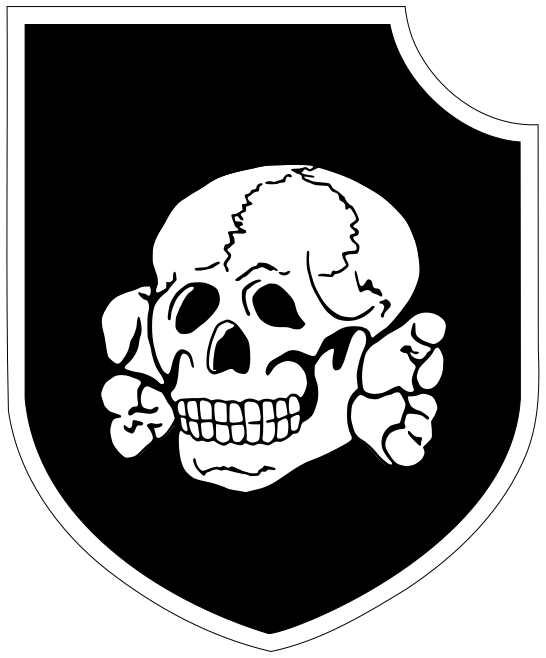
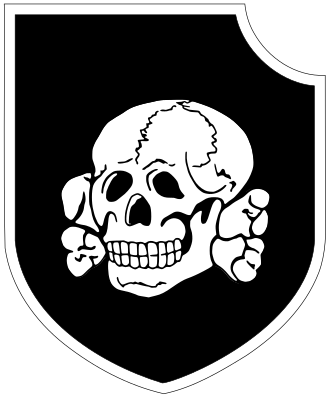
The 3rd SS Panzer Division "Totenkopf" (German: 3. SS-Panzerdivision "Totenkopf") was an elite division of the Waffen-SS of Nazi Germany during World War II, formed from the Standarten of the SS-TV. Its name, Totenkopf, is German for "death's head" – the skull and crossbones symbol – and it is thus sometimes referred to as the Death's Head Division.
The division was formed through the expansion of Kampfgruppe Eicke, a battle group named – in keeping with German military practice – after its commander, Theodor Eicke. Most of the battle group's personnel had been transferred to the Waffen-SS from concentration camp guard units, which were known collectively as SS-Totenkopfverbände; others were former members of Selbstschutz: ethnic German militias that had committed war crimes in Poland.
At the time of the Battle of France, the division was equipped with ex-Czech weapons.
Totenkopf was initially held in reserve during the Battle of France and invasion of the Low Countries in May 1940. The division was committed on 16 May to the front in Belgium. Later, it was decided that Totenkopf would reinforce the breakthrough of Erwin Rommel's 7th Panzer Division in the Cambrai area. Reaching the Bazuel area straddling both sides of the river it arrived on the front on 19 May, facing elements of the French 1st Moroccan Infantry Division, 5th North African Infantry Division, and 9th Motorized Division. Totenkopf suffered 16 dead and 53 wounded while killing 200 Moroccan soldiers in its first day in action.
In April 1941, the division was ordered East to join Field Marshal Wilhelm von Leeb's Army Group North. Leeb's force was tasked with advancing on Leningrad and formed the northern wing of Operation Barbarossa. It soon moved into a staging area near Insterburg and was assigned to Panzer Group 4. Totenkopf took part in the advance through Lithuania and Latvia, and by July had breached the Stalin Line. The division then advanced past Demyansk to Leningrad where it was involved in heavy fighting in August.
In February 1943 the division was moved back to the Eastern Front as part of Erich von Manstein's Army Group South. The division, as a part of SS-Obergruppenführer Paul Hausser's II SS Panzer Corps, took part in the Third Battle of Kharkov, blunting the Soviet offensive. During this campaign, Theodor Eicke was killed when his spotter aircraft was shot down. Hermann Priess succeeded Eicke as commander. The SS Panzer Corps, including the division, was then shifted north to take part in Operation Citadel, the offensive aimed at reducing the Kursk salient. It was during February 1943 that the 3rd SS Panzer Regiment received a company of Tiger I heavy tanks.
In December 1944, the IX SS Mountain Corps (Alpine Corps-Croatia) was encircled in Budapest. Hitler ordered the IV SS Panzer Corps to redeploy south to relieve the 95,000 Germans and Hungarians trapped in the city. The corps arrived just before New Year's Eve. The relief attempts were to be codenamed Operation Konrad. The first attack was Konrad I. The plan was for a joint attack by the Wiking and Totenkopf from the town of Tata attacking along the Bicske-Budapest line. The attack was launched on New Year's Day, 1945.
After the failed attepmts at relieving Budapest of Konrad I, II and III, the division was pulled back to the west, executing a fighting withdrawal from Budapest to the area near Lake Balaton, where the 6th SS Panzer Army under SS-Oberstgruppenführer Josef Dietrich was massing for the upcoming Operation Spring Awakening.
Gille's corps was too depleted to take part in the assault, instead it provided flank support to assaulting divisions during the beginning of the operation. Totenkopf, together with Wiking, performed a holding action on the left flank of the offensive, in the area between Lake Velence-Székesfehérvár. Dietrich's army made "good progress" at first, but as they drew near the Danube, the combination of the muddy terrain and strong Soviet resistance ground them to a halt.
As the offensive stalled, the Soviets forces counterattacked in strength on 16 March. The Germans were driven back to the positions they had held before Operation Spring Awakening began. Attacking the line between the Totenkopf and the Hungarian 2nd Armoured Division, contact was lost between the two formations. The 6th Army commander, General der Panzertruppe Hermann Balck, recommended moving the I SS Panzer Corps north to plug the gap and prevent the encirclement of the IV SS Panzer Corps, however, by the time the divisions finally began moving, it was too late.
On 22 March, the Red Army encirclement of the Totenkopf and Wiking was almost complete. The 9th SS Panzer Division Hohenstaufen held open a route which could be used to withdraw – the Berhida Corridor – and Gille's corps escaped the encirclement. The Red Army then launched the Vienna Offensive which destroyed any resemblance of an organised German line of defence. The remnants of the division retreated into Czechoslovakia where it surrendered to the American forces on 9 May.
The division was formed through the expansion of Kampfgruppe Eicke, a battle group named – in keeping with German military practice – after its commander, Theodor Eicke. Most of the battle group's personnel had been transferred to the Waffen-SS from concentration camp guard units, which were known collectively as SS-Totenkopfverbände; others were former members of Selbstschutz: ethnic German militias that had committed war crimes in Poland.
At the time of the Battle of France, the division was equipped with ex-Czech weapons.
Totenkopf was initially held in reserve during the Battle of France and invasion of the Low Countries in May 1940. The division was committed on 16 May to the front in Belgium. Later, it was decided that Totenkopf would reinforce the breakthrough of Erwin Rommel's 7th Panzer Division in the Cambrai area. Reaching the Bazuel area straddling both sides of the river it arrived on the front on 19 May, facing elements of the French 1st Moroccan Infantry Division, 5th North African Infantry Division, and 9th Motorized Division. Totenkopf suffered 16 dead and 53 wounded while killing 200 Moroccan soldiers in its first day in action.
In April 1941, the division was ordered East to join Field Marshal Wilhelm von Leeb's Army Group North. Leeb's force was tasked with advancing on Leningrad and formed the northern wing of Operation Barbarossa. It soon moved into a staging area near Insterburg and was assigned to Panzer Group 4. Totenkopf took part in the advance through Lithuania and Latvia, and by July had breached the Stalin Line. The division then advanced past Demyansk to Leningrad where it was involved in heavy fighting in August.
In February 1943 the division was moved back to the Eastern Front as part of Erich von Manstein's Army Group South. The division, as a part of SS-Obergruppenführer Paul Hausser's II SS Panzer Corps, took part in the Third Battle of Kharkov, blunting the Soviet offensive. During this campaign, Theodor Eicke was killed when his spotter aircraft was shot down. Hermann Priess succeeded Eicke as commander. The SS Panzer Corps, including the division, was then shifted north to take part in Operation Citadel, the offensive aimed at reducing the Kursk salient. It was during February 1943 that the 3rd SS Panzer Regiment received a company of Tiger I heavy tanks.
In December 1944, the IX SS Mountain Corps (Alpine Corps-Croatia) was encircled in Budapest. Hitler ordered the IV SS Panzer Corps to redeploy south to relieve the 95,000 Germans and Hungarians trapped in the city. The corps arrived just before New Year's Eve. The relief attempts were to be codenamed Operation Konrad. The first attack was Konrad I. The plan was for a joint attack by the Wiking and Totenkopf from the town of Tata attacking along the Bicske-Budapest line. The attack was launched on New Year's Day, 1945.
After the failed attepmts at relieving Budapest of Konrad I, II and III, the division was pulled back to the west, executing a fighting withdrawal from Budapest to the area near Lake Balaton, where the 6th SS Panzer Army under SS-Oberstgruppenführer Josef Dietrich was massing for the upcoming Operation Spring Awakening.
Gille's corps was too depleted to take part in the assault, instead it provided flank support to assaulting divisions during the beginning of the operation. Totenkopf, together with Wiking, performed a holding action on the left flank of the offensive, in the area between Lake Velence-Székesfehérvár. Dietrich's army made "good progress" at first, but as they drew near the Danube, the combination of the muddy terrain and strong Soviet resistance ground them to a halt.
As the offensive stalled, the Soviets forces counterattacked in strength on 16 March. The Germans were driven back to the positions they had held before Operation Spring Awakening began. Attacking the line between the Totenkopf and the Hungarian 2nd Armoured Division, contact was lost between the two formations. The 6th Army commander, General der Panzertruppe Hermann Balck, recommended moving the I SS Panzer Corps north to plug the gap and prevent the encirclement of the IV SS Panzer Corps, however, by the time the divisions finally began moving, it was too late.
On 22 March, the Red Army encirclement of the Totenkopf and Wiking was almost complete. The 9th SS Panzer Division Hohenstaufen held open a route which could be used to withdraw – the Berhida Corridor – and Gille's corps escaped the encirclement. The Red Army then launched the Vienna Offensive which destroyed any resemblance of an organised German line of defence. The remnants of the division retreated into Czechoslovakia where it surrendered to the American forces on 9 May.
Featured Missions
| Campaign | Mission |
|---|---|
| Operation Konrad | Death's Head |
| Operation Konrad | Sweeping Downwards |
| Operation Konrad | Southeast of Lake Balaton |